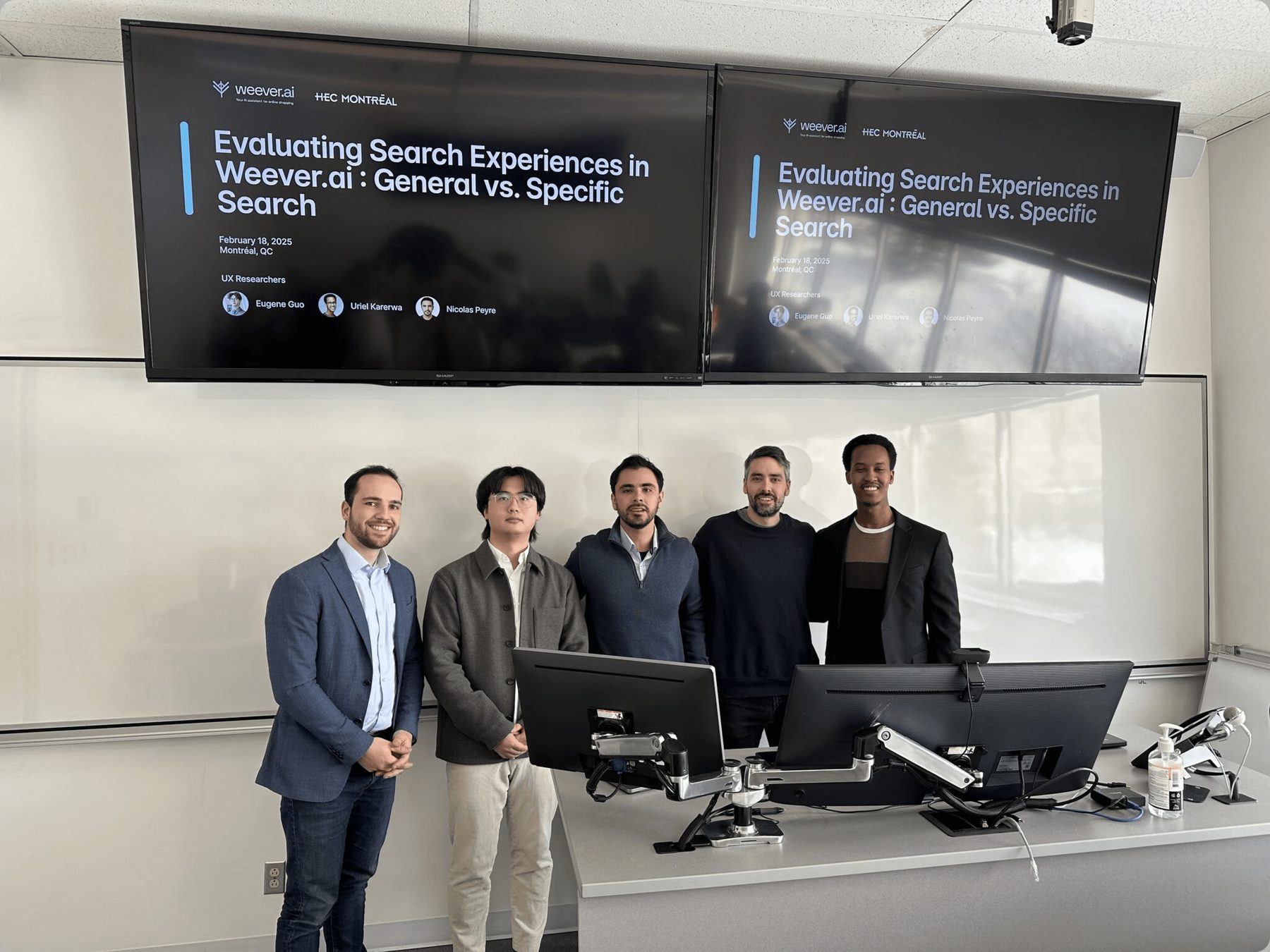
Part of a three-person UX research team from HEC Montréal evaluating Weever, an AI shopping assistant, for its CEO.
The platform had an 18% bounce rate, with users failing to convert into buyers.
Ran usability tests and interviews with 12 participants across two mindsets, then coded findings into an affinity diagram.
Recommendations reduced Weever's bounce rate from 18% to 14%.
Overview
Turning browsers into buyers.
Weever AI is an AI shopping assistant that pulls real user reviews to give users unbiased product recommendations.
I was part of a three-person UX research team from HEC Montréal brought in to evaluate the platform and present findings directly to the CEO of Weever, Frédéric Marcoux.
Working directly with Fred, we ran usability tests and user interviews targeting young adults in major Canadian tech hubs. We mapped how people were actually using the platform, found the weak spots, and figured out how to turn browsers into buyers.
The problem
Four pain points, one leaking funnel.
Our research uncovered four core pain points, each backed by how many of our 12 testers ran into it.
The research goals
The goal was clear: figure out why people were dropping off and what was stopping them from actually buying. We established three main objectives.
Evaluate users' first impressions and track how their trust in the AI shifts after interacting with the platform.
Identify the pain points in the user journey that prevent users from converting.
Evaluate the effectiveness of the platform.
Methodology
Two mindsets, one usability study.
To understand how users were experiencing the platform, we ran a usability study and conducted user interviews with 12 participants.
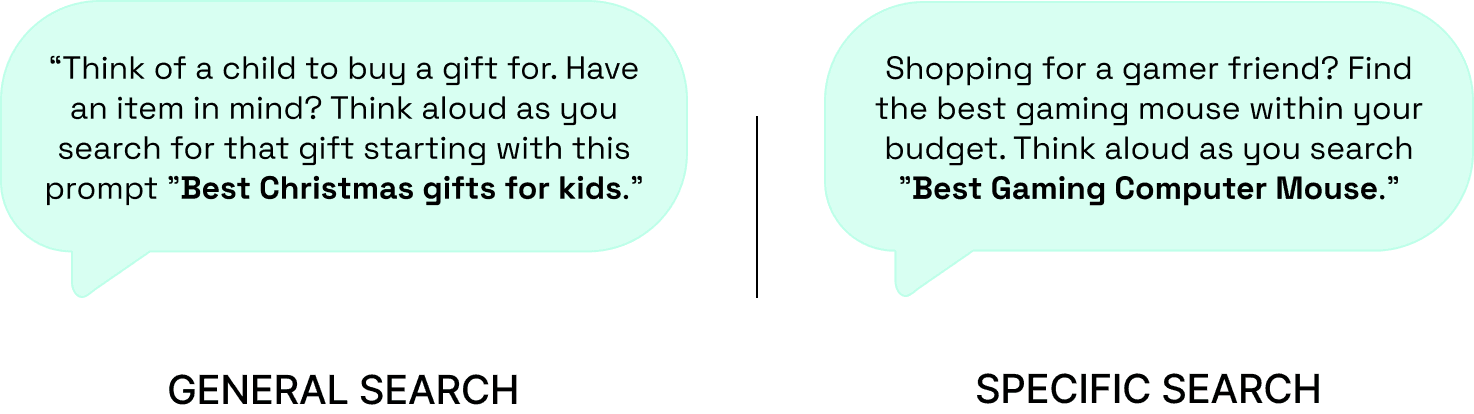
People shop in completely different ways. So we had all our testers evaluate the platform through two different lenses, a general browsing mindset and a specific purchase-intent mindset.

Ryan, the browser
General search- Doesn't know what they want yet.
- Relies on the AI for discovery and inspiration.

Claudio, the evaluator
Specific search- Already has a product in mind.
- Just needs help evaluating the best option.
Tasks
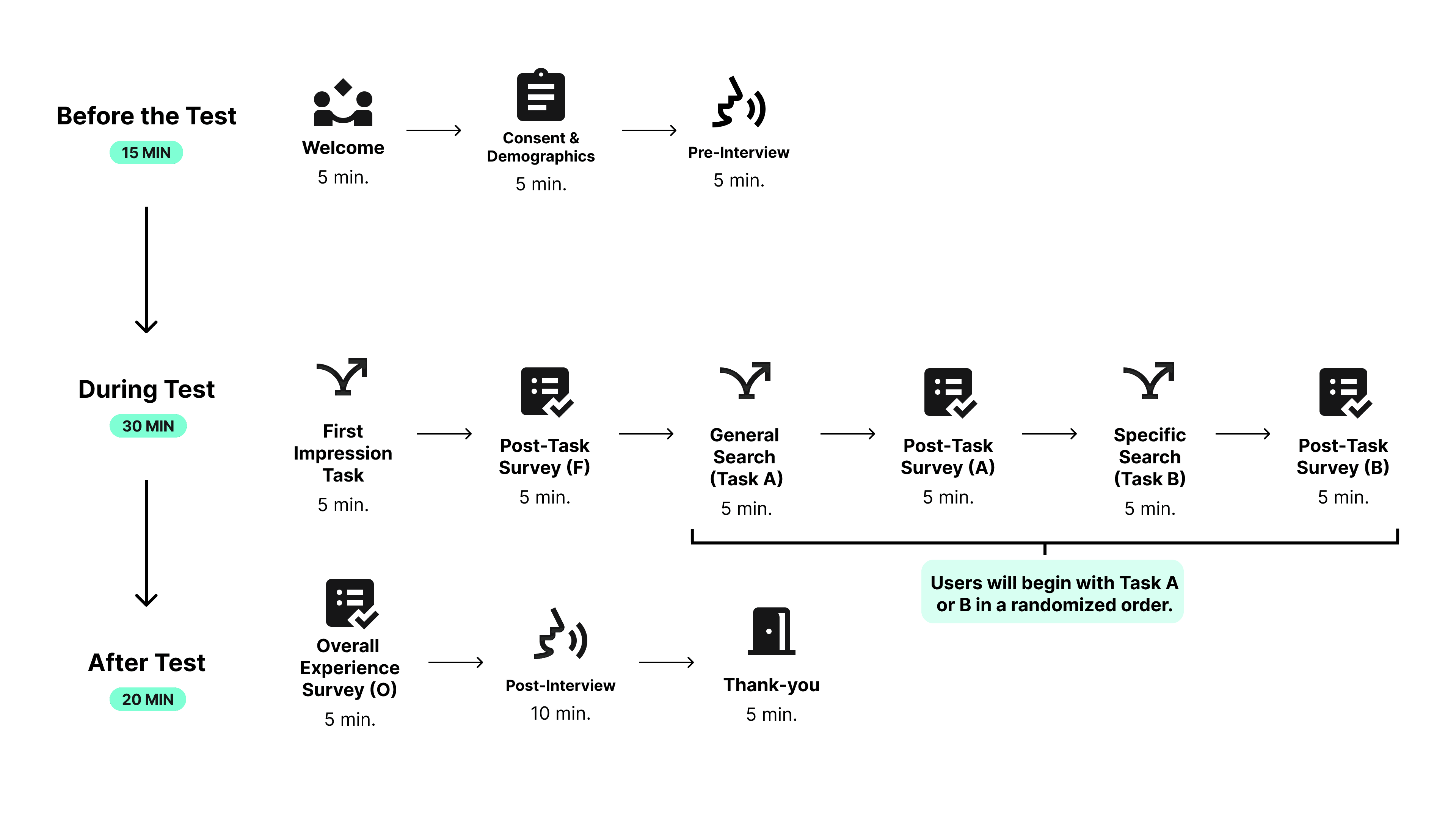
Each participant completed two tasks, a general and a specific search, while thinking out loud. We provided specific scenarios to put them in the right mindset.
We captured first impressions at the beginning, then compared them with post-task surveys and final interviews. That's how we tracked exactly where perception shifted and why the platform was losing people.
Analysis
From sticky notes to patterns.
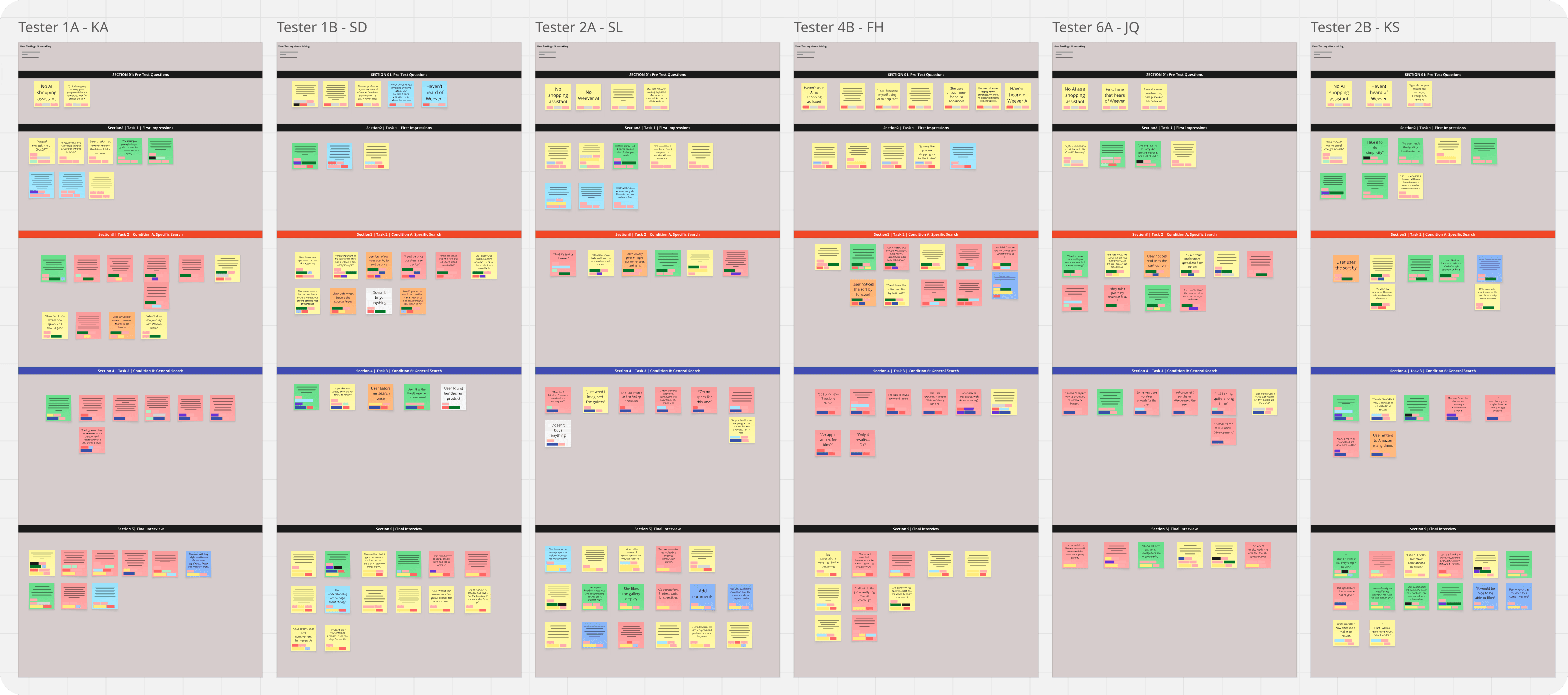
To make sense of all the think-aloud feedback and interview transcripts, I built an affinity diagram. All sticky notes were coded after the sentiment of the comment and divided by task. Then, I clustered recurring patterns and identified exactly where users were getting frustrated.
Key findings
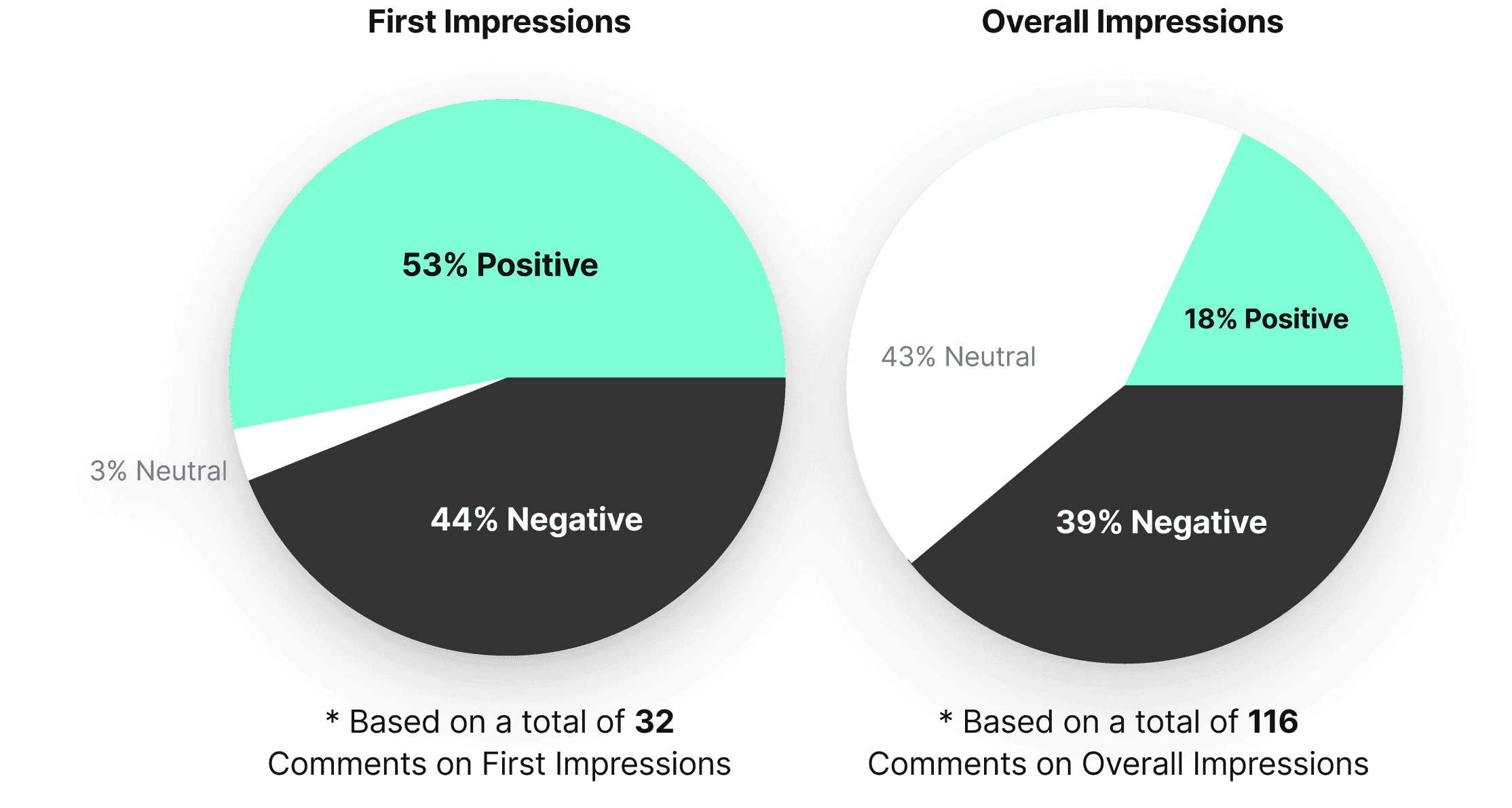
Initial impressions were positive. The study revealed users had slightly positive first impressions, describing Weever as modern and smart. Most expected it to act as a product recommendation or review tool, building strong initial trust based on appearance and branding.
Overall impressions dropped sharply after interacting with the platform. Comments about irrelevant results, slow loading, and limited transparency kept coming up.
"I searched for basketball gifts, but it gave me a Fisher-Price toy. That's not what I meant."Tester 2B
"If it takes more than 2 seconds I would probably just exit."Tester 3A
Recommendations
Ranking pain points, pairing each with a fix.
We ranked the most critical pain points from the study and paired each one with a concrete design recommendation.
Results
The four pain points were the right ones to solve.
Months after our research, the CEO reached out to share that implementing our findings had brought the bounce rate down.
The four pain points we identified were the right ones to solve.
22%
Relative reduction in Weever's bounce rate after our recommendations were implemented.
* Reported by the CEO, months after the research was presented.
Key takeaways
What this taught me.
Transparency builds tolerance
Users didn't mind waiting as long as they could see something was happening. The problem was never the speed, it was not knowing if the platform was even working.
Guidance beats guessing
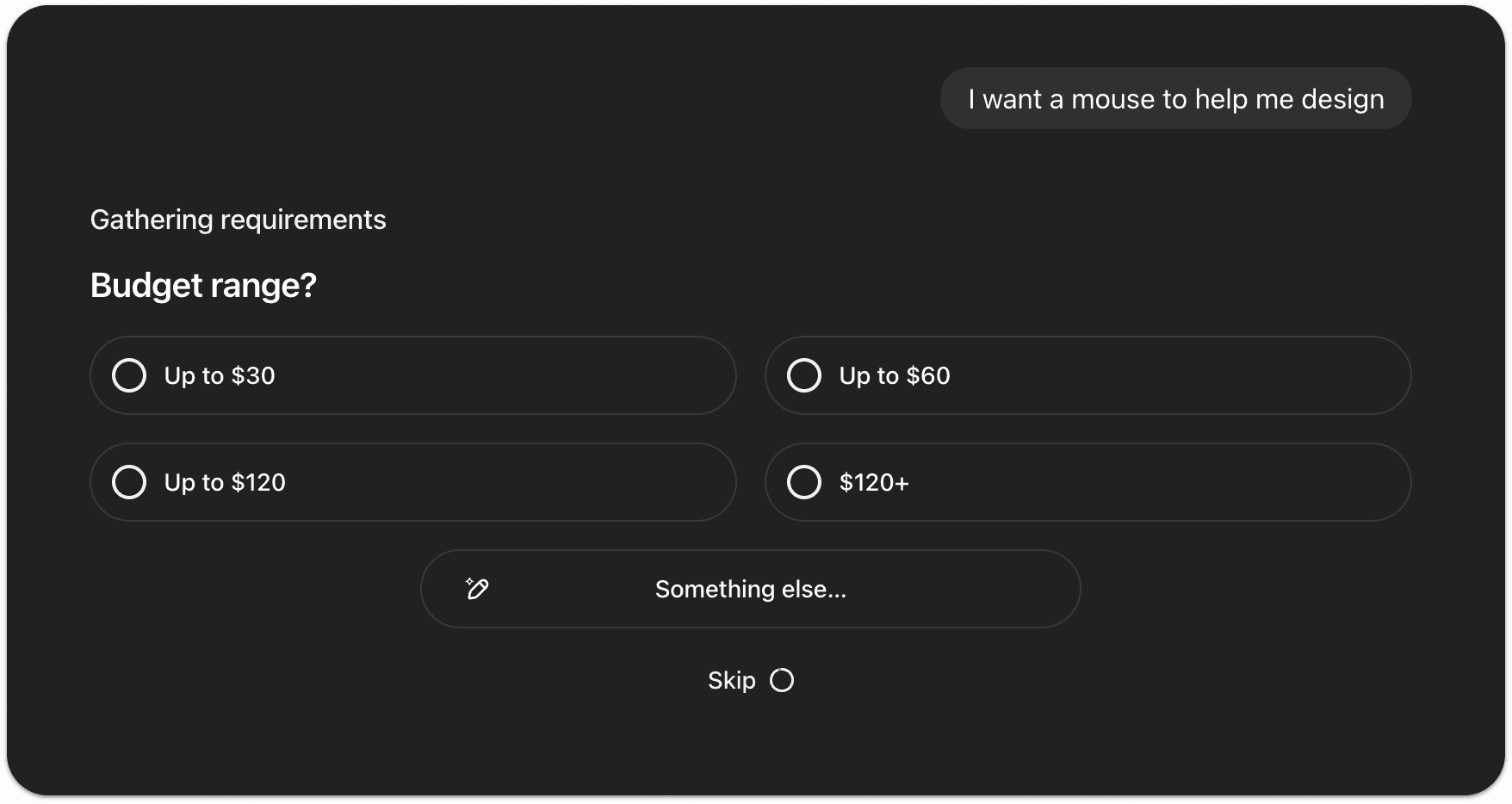
The AI kept trying to guess what users wanted instead of just asking. A simple follow up question would have changed everything.
Trust is fragile
One bad result was enough to lose the user. Explaining yourself and recovering from mistakes matters just as much as the algorithm itself.